City Water Is Already Treated. So Why Would My Home Need Water Treatment?
by J&J on October 29, 2026
You turn on the faucet, fill your glass, and get on with your day.
Your water comes from the city. It's already treated.
So why would you need water treatment at home?
It's a fair question.
And the answer starts with understanding what municipal water treatment does - and what you want from the water you use every day.
City water treatment helps protect public health. Treatment at home may address specific concerns such as mineral buildup, chlorine taste, or staining.
That doesn't mean every home needs another system.
It means the right place to start is with your water and your concerns.
That's why J&J Plumbing, Heating, Cooling & Electric offers a FREE Water Quality Test for Northeast Ohio homeowners.
Schedule Your FREE Water Quality Test →
What Does City Water Treatment Do?
Municipal water treatment serves an important purpose: providing drinking water that meets applicable public-health standards.
Depending on the water source and treatment process, utilities remove or reduce contaminants and disinfect the water to help control harmful microorganisms.
Many utilities use chlorine or chloramine to help maintain that protection as water travels through the distribution system to your home.
That's something to appreciate.
But it also helps to understand this:
Water that meets drinking-water standards can still have characteristics you notice around the house.
The EPA recognizes separate concerns involving taste, odor, color, staining, and deposits. These don't automatically mean water is unsafe, but they can affect your experience using it.
1. Treated Water Can Still Be Hard Water
Take a look around your kitchen or bathroom.
Do you notice white buildup around the faucet? Spots on drinking glasses? A showerhead that needs frequent cleaning?
Hard water may be part of the explanation.
Hardness comes primarily from dissolved calcium and magnesium. Municipal treatment doesn't necessarily remove enough of these minerals to make your water soft.
The amount remaining depends on your water source and the treatment your utility uses.
"Treated" and "softened" don't mean the same thing.
Hardness is generally a household-performance concern rather than a health concern. But when hard water is heated, minerals can form scale that affects water heaters and other equipment.
That's why a homeowner with treated city water might still consider a water softener.
The first step is finding out how hard the water actually is.
2. Disinfection Can Affect Taste and Smell
Have you ever taken a sip of tap water and noticed a chlorine taste?
Or filled a glass and caught a swimming-pool-like smell?
Chlorine plays an important role in protecting public drinking water. According to the CDC, chlorine or chloramine levels up to 4 milligrams per liter, or 4 parts per million, are considered safe in drinking water.
Even so, some people notice the taste or smell.
And if your family doesn't like the taste, you may find yourself buying bottled water week after week.
A taste preference doesn't automatically mean your water is unsafe. But it's still worth discussing.
If better-tasting drinking water is your main goal, tell us that. You may have different needs from someone concerned about buildup throughout the house.
3. Clear Water Doesn't Tell You the Whole Story
It's easy to assume that if water looks clear, there's nothing else to learn.
But dissolved hardness minerals aren't necessarily visible. Water can look clear in a glass and still leave mineral deposits after repeated use.
The same idea applies to other water characteristics: appearance alone can't give you a pH measurement or tell you the concentration of chlorine or iron.
You don't have to guess based on what's in your glass.
Testing helps put numbers behind the things you're noticing, so you can have a more useful conversation about your options.
4. Your Home's Needs May Be Different From Your Neighbor's
Your neighbor might be frustrated by buildup on the showerhead.
You might be tired of buying bottled water.
Another family might already have a treatment system and wonder whether it's addressing their concerns.
Even when homes share a municipal water supply, their plumbing, existing equipment, water use, and preferences can differ.
That's why choosing treatment shouldn't start with buying the same system someone else bought.
It should start with a simple question: What do you want to improve?
Do I Need Whole-Home Treatment or Just Drinking-Water Treatment?
Not every water concern requires the same solution.
It helps to think about where you notice the problem.
If your concern is mainly at the kitchen sink: Start by discussing your drinking-water goals and treatment options for that location.
If you're noticing mineral buildup throughout the house: A hardness test can help guide a conversation about water softening.
If you're seeing stains or unusual discoloration: Investigate the cause before choosing equipment.
If your water already meets your needs: You may not need additional treatment.
The goal is to match any recommendation to your results and priorities.
What Can J&J's FREE Water Quality Test Tell Me?
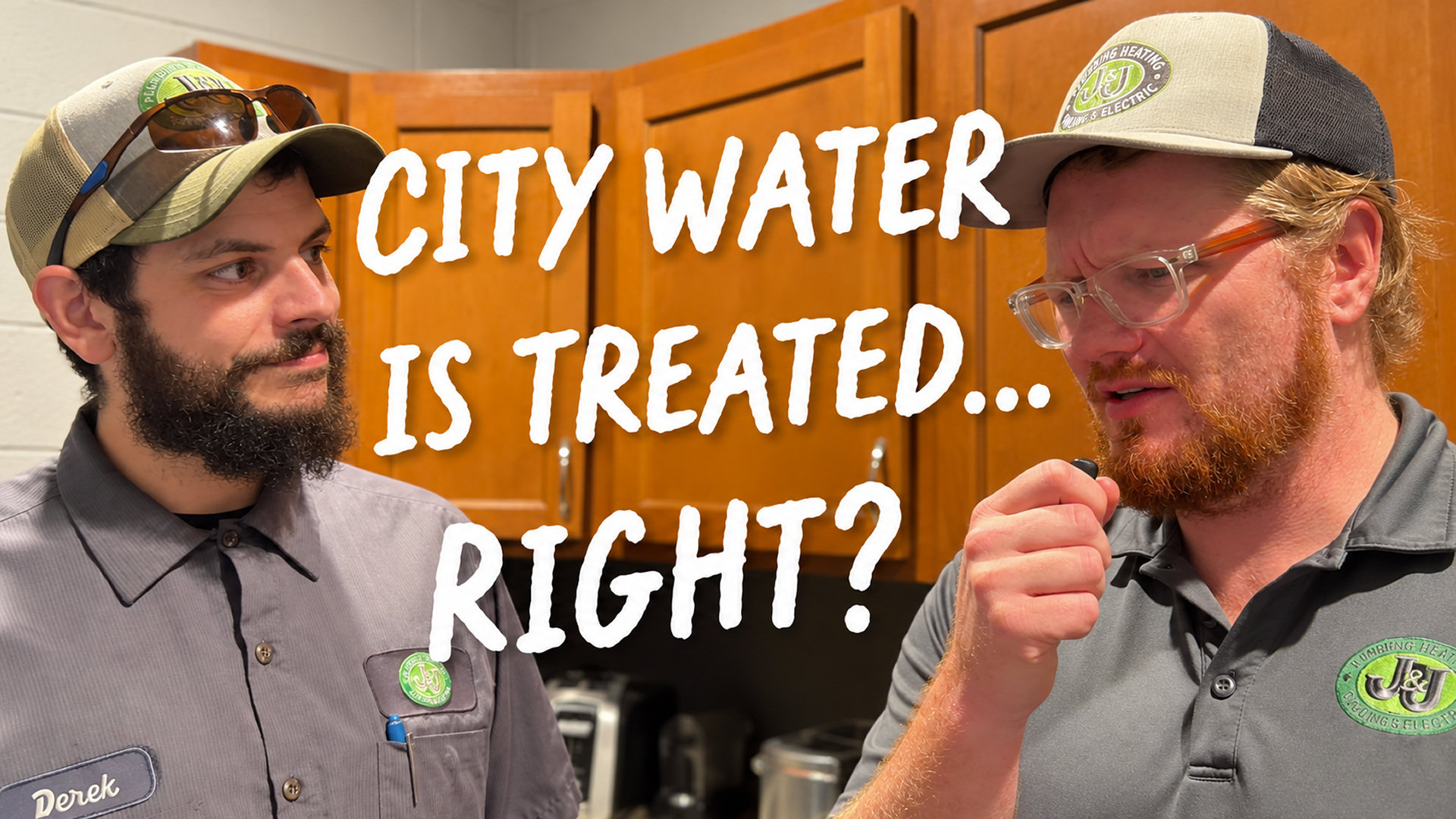
Derek from the J&J plumbing team explains that the basic screening checks four water characteristics:
- pH: How acidic or alkaline the water is.
- Chlorine: A disinfectant measurement that can help inform conversations about taste and odor.
- Iron: A possible contributor to metallic taste and reddish-orange staining.
- Hardness: The mineral content associated with scale and other household frustrations.
These measurements provide a starting point for understanding your home's water.
This screening does not automatically test for lead, PFAS, bacteria, pesticides, or every other potential contaminant.
Specific contamination concerns may require additional laboratory testing. Let the team know what you're concerned about when scheduling.
What About My City's Water-Quality Report?
If you receive municipal water, your utility's annual water-quality report is a useful place to learn about your water supply.
Look for information about the source of your water, testing results, and treatment.
Then bring your household observations into the conversation.
Are you noticing buildup? A taste you dislike? Stains that keep returning?
Your utility's report and testing at your home can answer different questions. Together, they can help you better understand your water and decide what to investigate next.
You Don't Need to Become a Water Expert
You shouldn't have to spend your evenings comparing equipment or trying to figure out which system your house might need.
Start with what you know.
"My showerhead keeps getting crusty."
"My family doesn't like the taste."
"I'm not sure our current filter is doing what we need."
Those are useful starting points.
J&J's plumbing team can help you understand your screening results, discuss your concerns, and explore appropriate next steps.
City water treatment does an important job. Whether your home would benefit from additional treatment depends on your water and what you want to improve.
💧 WA-TER You Waiting For?
Before you invest in water treatment, find out what your water actually needs.
SCHEDULE MY FREE WATER QUALITY TEST →
J&J Plumbing, Heating, Cooling & Electric
Your Neighbors. Serving You.
Frequently Asked Questions
If my city water is treated, why would I consider treatment at home?
You might want to address hardness, taste, staining, or another specific concern. Additional treatment isn't necessary for every household; testing and your goals help guide the decision.
Does city water treatment remove hardness?
Not necessarily. Some utilities reduce hardness, while others leave much of the naturally occurring calcium and magnesium in the water. Your water's hardness needs to be measured rather than assumed.
Does a chlorine taste mean my water is unsafe?
Not by itself. Chlorine is used to disinfect drinking water, and taste alone doesn't determine safety. Contact your utility about sudden or unusual changes in your water.
Will a basic water test tell me everything that's in my water?
No. J&J's basic screening checks pH, chlorine, iron, and hardness. Other substances require specific tests, often through a laboratory.
Do I need treatment throughout my entire house?
Not necessarily. Where you notice the concern—and what your results show - helps determine whether treatment at one faucet, throughout the home, or no additional treatment makes sense.
Curious about your home's water? We would love to help.
Book Your FREE Water Quality Test Today →

We've had your back since 1989. For time-sensitive requests, please give us a call at 330-678-1400.